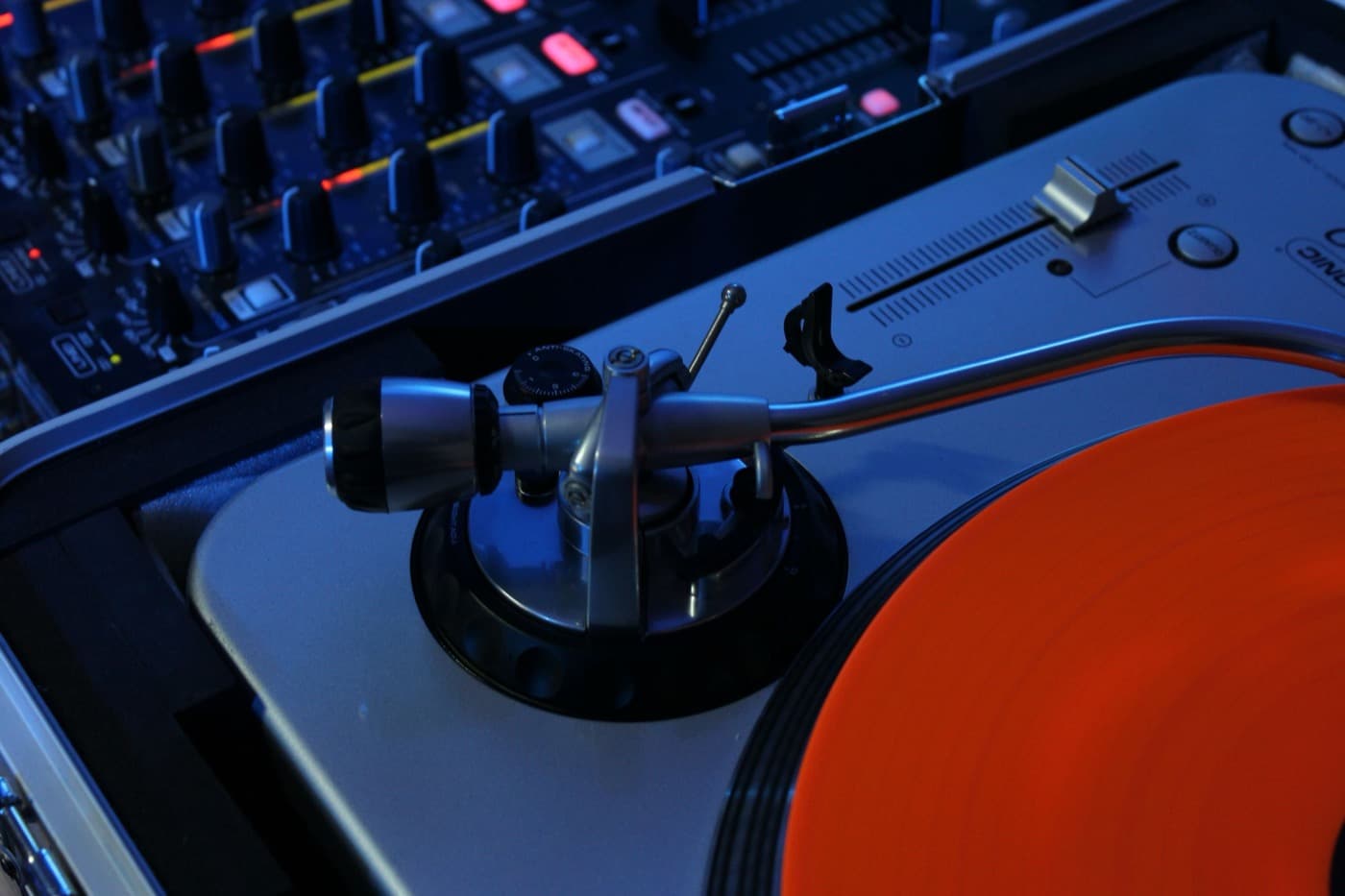
In rotation
Vinyl vs Digital DJing in 2026: Store Reborn
28 May 2026 · Dubrate
Vinyl vs digital DJing in 2026: why vinyl's record-breaking $1bn year and owned DJ files are the same fight — owning your music, not renting it.
In September 2025, two of techno's biggest names walked into a club in Ibiza carrying record bags. On 14 September, Carl Cox and Sven Väth played a back-to-back set at [UNVRS] entirely on vinyl. Cox put it plainly afterwards: "Sharing the night with Sven felt just like the old days... no sync, no frills just two friends spinning records & sharing the moment with you" (via DJ Mag). This is the same Carl Cox who keeps more than 150,000 records in a garage in Melbourne.
That set is the perfect way into the vinyl vs digital DJing debate in 2026 — because it isn't really a fight about audio quality. It's a fight about owning your music versus renting it. And once you frame it that way, vinyl's record-breaking year and the rise of owned digital files turn out to be the same story.
Vinyl's resurgence in 2025 was about ownership, not nostalgia
The numbers are genuinely historic. According to the RIAA's year-end report (published 16 March 2026), US vinyl revenue crossed $1 billion in 2025 for the first time since 1983 — the era when vinyl last made up nearly half of all recorded-music money. It was the 19th consecutive year of growth, up 9.3% year-on-year, with 46.8 million units sold.
A few facts that reframe the whole picture:
- Vinyl crushed CDs again: 46.8M vinyl units versus 29.5M CDs, with vinyl earning more than three times CD revenue — the fourth straight year LPs outpaced CDs.
- Indie record stores are the engine: per Luminate, independent shops account for roughly 40% of all US vinyl album sales and 29% of all physical sales. 37% of vinyl buyers bought a record at an indie store in the past year — more than any other venue.
- It's a global US story: US vinyl is now nearly half of the format's entire worldwide value.
- The UK mirrors it: vinyl rose for an 18th straight year, up 13.3% to 7.6M units and £174.4m — the highest in over three decades — and seven of the top ten vinyl albums were new releases, not reissues (Music Week).
People aren't buying records because they sound marginally warmer. They're buying records because a record is theirs, forever, and the money goes somewhere they can see.
So do DJs still use vinyl? Some never stopped
Sven Väth is one of a handful of elite DJs who simply refused to go digital. "Every set I play and construct comes from the heart and I need to smell and feel my vinyl," he told The Night Bazaar. There's a whole vinyl-only techno subculture built on this — treating limited selection as a discipline, because when you carry fewer records you know every one of them deeply.
But that same scene is honest about the trade-off. As DJ educators like Crossfader put it, vinyl is "inconvenient, difficult to use, and you spend ages searching for music." Vinyl teaches the foundations digital hides — ear-based beatmatching, manual pitch-riding, ruthless track selection — and most working DJs treat it as complementary to digital, not a rival.
What digital actually wins on (and where vinyl still beats it)
Here's the practical reality for a gigging DJ. Digital prep is the killer feature: you analyse BPM and musical key at home, set hot cues and beatgrids, then export to a USB stick that loads instantly into any club's Pioneer/AlphaTheta CDJs (RecordCase). No laptop, no record bag. Vinyl means memorising arrangements and cueing by hand.
The software has raced ahead, too. Serato remains the leader for DVS (timecode vinyl) and is widely judged to have the best-sounding real-time stem separation in 2025; Rekordbox is the Pioneer/AlphaTheta club standard (Digital DJ Tips). Engine DJ 5.0 with the Rane System One even became the first standalone hardware to render stems with no laptop at all — features vinyl simply cannot offer.
Let's be fair about cost, though. A pro vinyl rig — two turntables and a mixer — runs into the low thousands, versus a few hundred for an entry digital controller plus a laptop you already own. New LPs typically cost $25–50 each, and pressing is supply-constrained: PVC shortages and ageing plants mean multi-month lead times and rising prices (Grammy.com). Vinyl's revenge is that a record is a resaleable physical asset with artwork and ritual a file can never match.
The honest bit: digital downloads are not "winning"
It would be easy — and dishonest — to claim Dubrate rides a digital sales boom. It doesn't. Paid digital downloads are now only about 2% of US recorded-music revenue, down 18% to $336m in 2024, falling for the 13th straight year, while streaming sits at 82% (RIAA). Owning files is a values-and-quality niche, not a growth wave.
But that's exactly the gap the vinyl revival exposes. The vinyl surge and the DJ who buys lossless WAVs are doing the same thing for the same reason: they want to own the music permanently and put money in the artist's hand. Streaming DJ subscriptions (Beatport LINK, SoundCloud Go+) only grant temporary, access-only licences — no recording, no export, no public-performance rights, and tracks can vanish from the catalogue (DJ.Studio). Owning the file is the only way to guarantee a track stays in your set. We unpack this fully in streaming vs owning your DJ tracks.
The record store, reborn as files
This is where digital ownership becomes the third option — between renting (streaming) and the beautiful-but-impractical (vinyl). Beatport is the incumbent: tracks are owned and downloadable as MP3 320, WAV or AIFF. Bandcamp is the artist-economics benchmark, returning roughly 80–85% to artists and paying out $19m via Bandcamp Fridays in 2025 alone — but it often lacks the BPM/key metadata DJs need to play out of the box (more on Bandcamp for DJs).
That's the spot Dubrate is built for. We pair record-store permanence with gig-ready practicality:
- Artists keep 85% (a flat 15% platform fee), with weekly Stripe payouts — direct-to-artist economics in the same spirit as a Bandcamp Friday.
- Every track is tagged with BPM and a Camelot key for harmonic mixing — clean, owned WAV/AIFF files that load straight onto a USB or into a DVS rig.
- You own the file outright — pay-as-you-go or via subscription — with wallet top-ups that strip out per-download card fees, plus per-buyer forensic watermarking in beta.
A Digital Vinyl System is the literal proof these worlds aren't enemies: real turntables, hands-on feel, an unlimited library of owned files. Carl Cox spinning records and a DJ buying lossless on Dubrate aren't opposites — they're the same instinct, expressed two ways.
If you want the permanence of a record with prep vinyl can't touch, browse the catalogue, dig by genre, or compare the subscription tiers. For more on the landscape, see our guides on where to buy DJ music in 2026 and the best Beatport alternative for DJs.
The record store never died. It's being reborn — as files you actually own. Start your crate at [app.dubrate.co.uk](https://app.dubrate.co.uk).